The Federal Resume Secret: Why Your 1-Page Resume is Getting You Rejected

The Federal Strategy Team
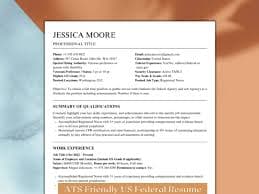
If you’ve been applying for federal jobs on USAJOBS using the same sleek, one-page resume you used for Google or Amazon, you’ve likely been met with a wall of silence.
In the private sector, brevity is king. In the federal government, details are the currency of compliance. According to the latest guidance from the Office of Personnel Management (OPM), a federal resume is not a summary; it’s a legal document of your qualifications.
The biggest mistake candidates make? Thinking "more" is "less." In the federal world, "less" is a direct ticket to the "Not Qualified" pile.
1. The "Length" Paradox
While a private-sector resume should rarely exceed two pages, a federal resume is expected to be anywhere from 4 to 6 pages.
Why? Because federal HR specialists (and the algorithms they use) are looking for specific "time-in-grade" and "specialized experience" metrics. If you don't explicitly state that you performed a task for X hours a week over Y years, they cannot legally give you credit for that experience.
"We often see Staff Engineers from big tech companies fail to clear the first hurdle because they summarized five years of complex architecture into two bullet points," says a former OPM hiring specialist.
2. Mandatory Compliance Data
A federal resume requires data points that would be considered "red flags" or "noise" in the private sector. If these are missing, your application is technically incomplete.
The Federal Checklist:
- •GS Levels: If you've held federal roles, you must list your Series and Grade (e.g., GS-2210-13).
- •Hours Per Week: You must list exactly how many hours you worked in each role (e.g., 40 hrs/wk).
- •Supervisor Info: You must state whether your previous supervisor can be contacted.
- •Salary: While often optional, many agencies still look for historical salary data.
3. The "JOA" Mirroring Strategy
Federal hiring is driven by the Job Opportunity Announcement (JOA). Every JOA has a section titled "Qualifications" and "How You Will Be Evaluated."
In 2026, federal ATS systems are using more advanced semantic matching, but they still rely heavily on the exact terminology found in the JOA. If the announcement asks for "Management of distributed cloud-native infrastructures," your resume should not say "Built serverless apps." It should use the exact phrasing of the JOA.
This isn't about keyword stuffing; it's about Terminological Alignment. You are showing the HR specialist (who may not be a technical expert) that you possess the specific skills they've been told to look for.
Pro Tip for Tech Workers:
When applying for 2210-series (IT Management) roles, mirror the structure of high-performing technical resumes like our Google SRE resume example, but expand the bullet points to include the "Context, Challenge, Action, Result" framework required by OPM.
4. Quantify or Disqualify
Federal resumes are audited for truthfulness. Saying you "Improved efficiency" is a subjective claim. Saying you "Reduced procurement latency by 22% over a 12-month period, impacting a $50M budget" is a quantifiable accomplishment.
In 2026, the OPM is placing higher weight on Demonstrated Impact. They want to see that your actions resulted in tangible gains for the taxpayer or the agency's mission.
Master the Federal Market.
Navigating USAJOBS is a skill of its own. Our AI builder is now updated with the latest OPM compliance standards to help you build a 5-page powerhouse in minutes.
Build My Federal ResumeThe Bottom Line
The federal government is the largest employer in the world. Its hiring process is rigid, but it is also predictable. If you follow the OPM rules—detailed length, mandatory data, and JOA mirroring—you move from the "digital void" to the "referred to hiring manager" list.
Stop trying to make your federal resume look like a startup pitch. Make it look like a federal record.